 Setouchi Tourism Lemon

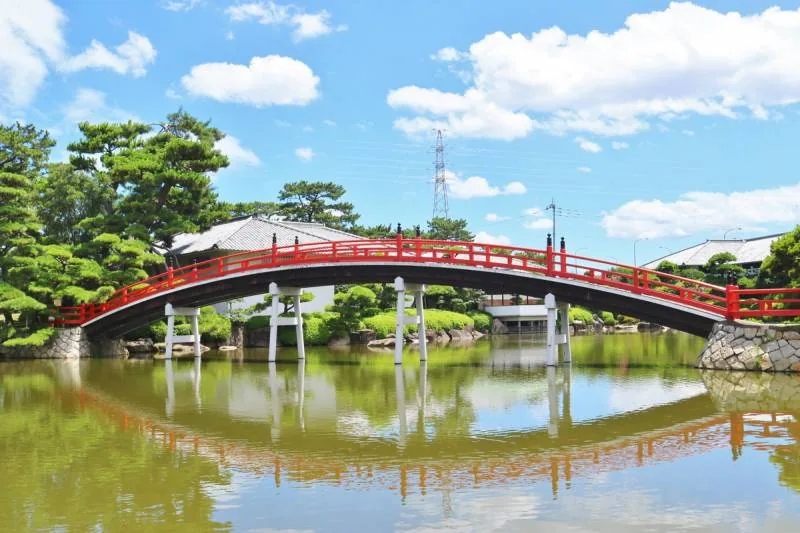
A daimyo garden built in 1688. Daimyo gardens were created by famous samurai during the Edo period to show off their power, and are known for their gorgeous scenery. The vast park has a pond shaped like Japan’s largest lake, Lake Biwa, and eight islands.The islands are connected by bridges so that you can admire them while walking.
What are the highlights of “Nakatsu Banshoen”?
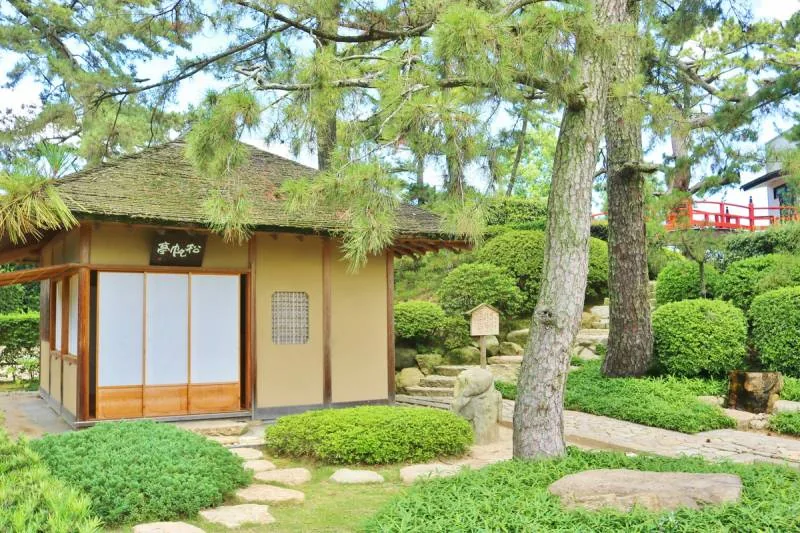
has a wonderful view from Yogetsubashi Bridge, which is popular among tourists. The attached Marugame Museum has a “Picture Gallery” that collects works by French Barbizon school painters, a “Pottery Hall” where you can see Persian pottery dating back to BC, and an “Event Hall”. A beautiful Japanese garden where you can feel the glory of the Edo period. Kaifuutei, a Japanese restaurant adjacent to the garden, is a 600-year-old pine tree with a 15m long umbrella shaped like a wide open umbrella.Opening Hours: Daytime | 11:00-14:30 Night | 17:00-21:30 Closed on Wednesdays
Please come and experience the charm of what is called “the Kyogoku family’s feudal lord garden built in the Edo period.”
3 tips for making the most of Nakatsu Banshoen
① Best time to visit
The best times to see the cherry blossoms are in the spring (late March to early April) and the autumn leaves (mid to late November). It is also a famous place to visit during the illumination period.
② Suggested time needed
Estimated stay time is 1.5 to 2 hours. To make the most of your visit, we recommend allowing a little extra time.
③ What to bring
Basic information of Nakatsu Banshoen
How to access Nakatsu Banshoen
Located in Marugame City, Kagawa Prefecture. You can visit by public transportation + foot from Takamatsu Airport or major stations, or by car.
Nearby tourist spots that you should visit together with Nakatsu Banshoen
Marugame City and nearby areas are dotted with attractive spots that you should visit together with Nakatsu Banshoen.
Frequently asked questions about Nakatsu Banshoen
Q1. When is the best time to see cherry blossoms and autumn leaves?
The best time to see cherry blossoms is from late March to early April, and the best time to see autumn leaves is from mid-November to late November. Also be sure to check the illumination period.
Q2. How much is the entrance fee?
Please refer to the basic information. Annual passes may also be available.
Q3. How long does it take to walk around the park?
It takes 1.5 to 2 hours if you go slowly. You can enjoy it even more by combining the teahouse and boat experience.
Q4. Can I use it with a wheelchair or stroller?
The park basically has barrier-free areas. Some roads are gravel, so we recommend checking in advance.
Summary|Nakatsu Banshoen is a must-see when visiting Marugame City
Nakatsu Banshoen is famous for its “Daimyo garden of the Kyogoku family built in the Edo period.” When visiting Marugame City, Kagawa Prefecture, be sure to include it in your schedule. An unforgettable journey awaits you, where you can experience the spectacular scenery, local food, and culture unique to Setouchi.
Photo provided by:shikoku-guide.com